ai-powered-markdown-translatorArticle translated from fr to en with gpt-5.4-mini.
July 17 is marked by a business model shift in agentic coding tools: Amp launches its first monthly subscriptions, ending its all-pay-as-you-go model. Claude Code releases a new version with anti-runaway guardrails for WebSearch and sub-agents, while Perplexity, Gemini, and Grok strengthen their enterprise autonomous agent platforms. Media generation remains very active at HeyGen, ElevenLabs, and Runway, and open research publishes two papers that question the current limits of models.
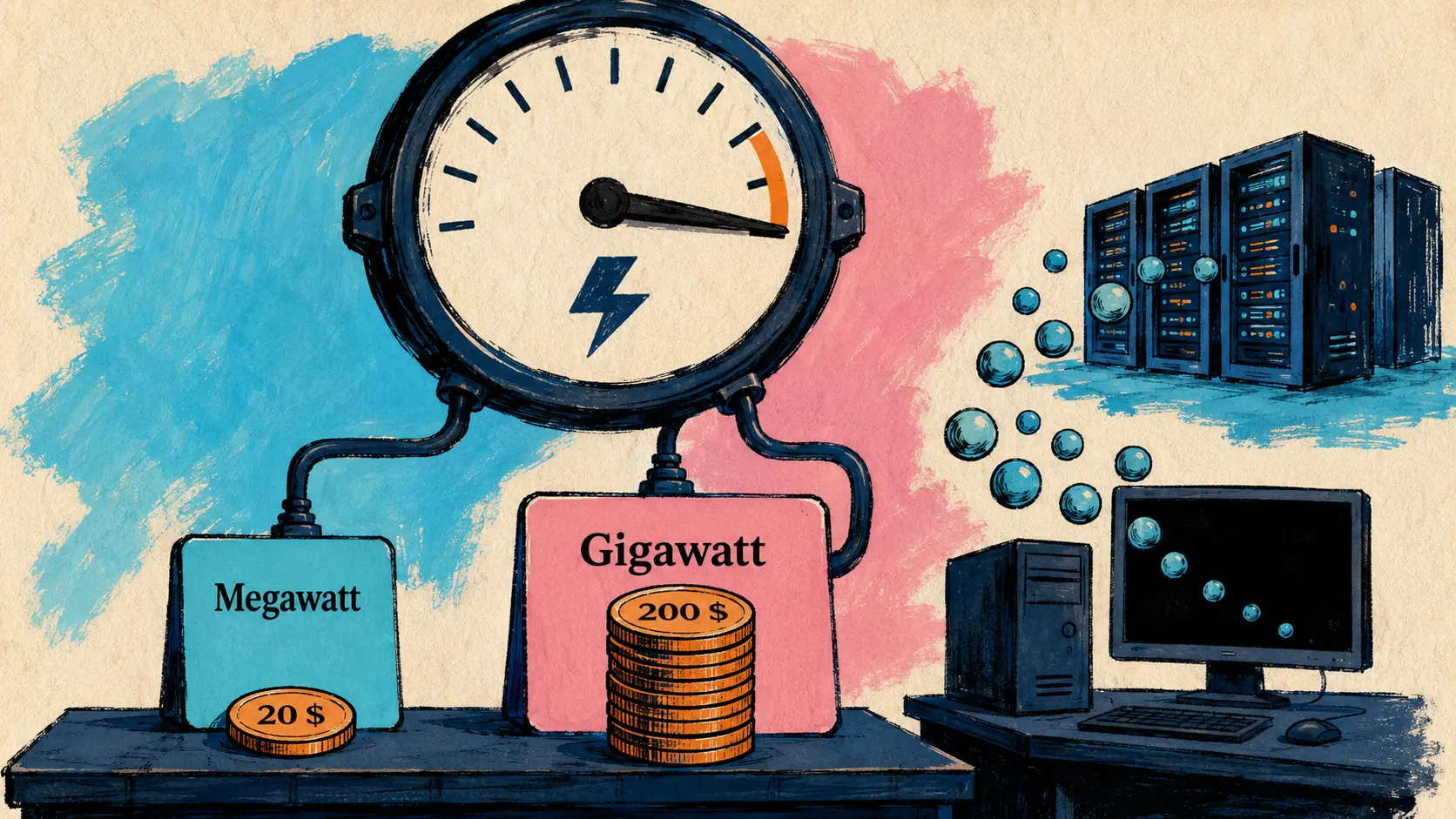
Amp launches its first monthly subscriptions: Megawatt and Gigawatt
July 17 — Amp (Sourcegraph / Amp Frontier Corporation) launches its first monthly subscriptions in beta, a strategic shift for a product that until now operated exclusively on pay-as-you-go (raw API pricing) — a model that made it more expensive than its subscription competitors. Amp describes itself in its announcement post as having been, until now, “the Apple or Porsche of agentic coding tools”.
| Plan evaluated | Monthly price | Included orb hours | Included agent usage | Available modes |
|---|---|---|---|---|
| Megawatt | $20 | 750 h (small orbs) | $20 | low, medium |
| Gigawatt | $200 | 1,000 h (large orbs) | $200 | low, medium, high, ultra |
Megawatt also includes the option to link your own ChatGPT subscription to access GPT-5.6, or your X Premium+/SuperGrok subscription. A launch offer doubles the included usage (orbs and agents) for the first month, for any subscription taken out before Sunday, July 19. Pay-as-you-go remains available for those who do not want to subscribe; beyond the included limits, you must link a ChatGPT subscription or add paid credits.
Amp justifies this shift by the overall drop in the cost of high-quality tokens (the cited example: GLM-5.2 in the new “low” mode) and by the move of agentic work toward remote machines (the “orbs”) rather than the local workstation — the company says it wants users to “kill their singleton local development environment”.
“Introducing Amp Subscriptions. $20 or $200 gets you on the agentic frontier with us.” — @sqs on X
Claude Code and Amp: new agentic capabilities
Claude Code CLI v2.1.212: anti-runaway guardrails
July 16 — Anthropic releases version 2.1.212 of Claude Code (published on npm at 9:20 PM Paris time). The most visible change concerns /fork : the command now copies the conversation into a new background session (visible in claude agents), while the old sub-agent launched in-session is renamed /subtask. Two anti-runaway guardrails appear: a per-session limit on WebSearch tool calls (200 by default, adjustable via CLAUDE_CODE_MAX_WEB_SEARCHES_PER_SESSION) and a cap on the number of sub-agents that can be launched (200 by default, CLAUDE_CODE_MAX_SUBAGENTS_PER_SESSION). MCP tool calls exceeding two minutes now automatically switch to the background.
Two fixes relate to security: plan mode can no longer execute Bash commands that modify files (touch, rm) without a permission prompt, and creating a worktree following a symlink committed in .claude/worktrees can no longer write files outside the repository.
Amp: agents can now spawn other agents
July 17 — Amp launches “From Agent to Agent”: Amp agents can now spawn other agents — in orbs (remote machines), on the local machine, or on any other machine — and exchange messages and files among themselves.
Use cases cited by Amp: launch an agent in an orb to handle a secondary bug while the user continues their main work, run several threads in parallel (for example four threads in “low” mode to test a flow at four different screen sizes), retrieve useful files from an old abandoned thread, offload a task to another machine, or coordinate cross-project work by having an agent document an API change. This feature extends “Agents in Orbs” (June 30) and “Custom Agents” (June 19), but introduces for the first time inter-agent communication across threads and machines. Co-founder Thorsten Ball had teased the feature on X a few hours before the official launch.
Autonomous agents: automation and productivity in enterprise
Manus (James) at Ascendea: 90× productivity case study
July 17 — Manus publishes a case study highlighting Ascendea, a British agency based at the University of Warwick Science Park, which develops CRM, agents, and automations for small businesses. Its CTO Rob Arnold nicknamed his Manus instance “James” and made it the company’s AI chief of staff, at the top of a three-layer architecture: Manus for complex tasks, Slack conversational agents (Victor, Victoria, Ava) for the everyday human interface, and six local agents running scheduled repetitive tasks on a dedicated server.
The flagship use case: 303 standard operating procedures (SOP) generated in a single day, work estimated at about 14 weeks for two people using a manual approach. Ascendea now operates with only 10 human employees, serves 112 active clients, and runs 28 to 33 AI workflows in production coordinated via Manus.
Perplexity launches Projects, an evolution of Spaces in Computer
July 17 — Perplexity announces Projects, the successor to Spaces within Perplexity Computer, its agentic environment. Projects brings files, applications, and conversation threads together in a single persistent session: each new task starts with the full context of previous sessions.
The feature targets enterprise teams: it connects tools like Drive, Notion, Linear, Salesforce, Snowflake, or Slack/Microsoft Teams (more than 400 connectors announced), while isolating each user’s data, memory, and access. Projects is built on Brain, Computer’s self-learning memory system, integrates with Skills, and offers a “trust panel” listing connected sources and answer traceability. Existing Spaces migrate automatically, available today for all Computer users. Notably, the official page shows a publication date of July 22, even though it is already online and publicly accessible since the 17th.
🔗 Perplexity Projects announcement
Automations in Grok
July 16 — xAI launches Automations in Grok: describe a task once, then let it run automatically on a schedule (once, daily, weekdays, weekly, monthly, or yearly) or triggered by the arrival of an email matching defined filters. Each run opens a full conversation with Grok, viewable in a run history, and can notify by email, app notification, both, or neither.
Automations are available on grok.com and in the Grok mobile app (iOS, Android). Scheduled automations are available to all users, while email triggers are reserved for SuperGrok subscribers.
Google / Gemini: enterprise agent platform
Conductor becomes a portable plugin, compatible with Antigravity CLI and Claude
July 16 — Conductor, the spec-driven development (Spec-Driven Development) extension launched last year for Gemini CLI, becomes the Conductor Plugin, a format that bundles skills, rules, MCP servers, and hooks into a single package. Previously tied exclusively to Gemini CLI, Conductor is now also usable in Antigravity CLI and in Claude.
The agent now naturally converses to generate and evolve the context, specifications (spec.md) and the plan (plan.md), kept as persistent, versioned Markdown artifacts. Google indicates backward compatibility with the old commands and a higher success rate on the most complex subset of TerminalBench tasks. Installation is done via agy plugins install https://github.com/gemini-cli-extensions/conductor for Antigravity CLI.
Gemini Enterprise Agent Platform partners with Parallel Web Systems
July 16 — Google Cloud announces a partnership with Parallel Web Systems (founded by former Twitter CEO Parag Agrawal) to natively integrate its search infrastructure as a new web grounding provider on the Gemini Enterprise Agent Platform. The goal: allow agents to rely on recent and verifiable web results, with precise citations, for tasks such as automated KYC checks or product catalog enrichment.
The feature is available via the Gemini API, selectable in Agent Studio, and billed on a usage basis through Google Cloud Marketplace, with a zero-data-retention option for sensitive workloads. Unlike traditional web search, the integration allows extraction and permanent caching of data to enrich internal databases, as well as post-processing of results by other LLMs. According to Parag Agrawal, AI agents will soon use the web far more than humans ever have, which requires search infrastructure designed for how they operate.
Media generation
HeyGen — Batch APIs in production
July 17 — HeyGen launches its Batch APIs, allowing up to 100 videos, translations, lip syncs, or uploads to be submitted in a single request, with a single notification webhook once the batch is processed. This feature targets large-scale production use cases — agencies, marketing teams — that previously had to manage hundreds of individual API calls for the same volume of content.
🔗 Announcement on X — see also the technical documentation
HeyGen — HyperFrames gets an integrated media library
July 17 — HeyGen adds an integrated media library to HyperFrames, its code-based video creation tool (write HTML, render video). It brings together more than 10,000 audio tracks, 75,000 images, sound effects, and logos, accessible for free with a HeyGen account, in addition to access to the company’s generative models. The assets used are saved locally, avoiding the need to search again for each new project.
ElevenLabs — The Odyssey narrated by Sir Michael Caine’s AI voice
July 17 — ElevenLabs offers a full reading of Homer’s The Odyssey narrated by a fully licensed AI voice of actor Sir Michael Caine, available for free on the ElevenReader app. This is another example of a fully authorized celebrity voice partnership, in line with ElevenLabs’ strategy of offering premium audio content via officially licensed AI voices rather than simple generic synthesis.
Runway Agent 2.0 ranked #1 on the independent Physion-Arc 1.0 benchmark
July 16-17 — Runway highlights the results of the independent Physion-Arc 1.0 benchmark, published on July 16 by third-party evaluator Physion Labs, which submitted six AI video agents to 30 cinematic prompts evaluated across 16 metrics. Runway Agent (version 2.0, launched at the end of June) comes out on top across the three pillars evaluated: narrative coherence, cinematic language, and production quality.
Runway also published a technical article detailing the philosophy behind Agent: a visual-first interface rather than chat-centric, a system encoding knowledge of the strengths and weaknesses of each underlying model, and a “skills” layer combining those capabilities into workflows. The next directions mentioned: context memory across sessions, batch creation, and task scheduling directly in Agent.
Research & open models
Sakana AI — “Diffusing Blame” research: applying Dale’s principle to RL
July 17 — Sakana AI publishes “Diffusing Blame,” research exploring whether a neural network can learn competitively while strictly respecting Dale’s principle — the biological constraint that a neuron can be either excitatory or inhibitory toward its neighbors, never both. The paper is accepted to the #ALIFE2026 conference and available on arXiv.
In a second post in the same thread, the team presents ED-PPO, a variant of the PPO (Proximal Policy Optimization) reinforcement learning algorithm incorporating an error-diffusion mechanism that respects this biological constraint, demonstrated on a control task. This work is part of Sakana AI’s research line on biologically inspired architectures, distinct from its more commercial product announcements.
PerceptionBench: no model exceeds 60% accuracy (Kimi / Moonshot AI)
July 16 — The Kimi team publishes PerceptionBench, a benchmark that isolates the visual perception of large multimodal models into ten atomic capabilities: visual relation, counting, attribute, depth and 3D, localization, comparison, fine-grained recognition, contextual integration, OCR, and hallucination. These categories are derived from analysis of real failure cases of frontier models across more than 40 existing benchmarks. The dataset includes 3,000 verified questions, each answerable by simple observation, with no reasoning or external knowledge required.
“No model we evaluate clears 60% accuracy, and models with nearly identical overall scores can exhibit very different perceptual strengths and weaknesses.” — Kimi Team, PerceptionBench
This benchmark is also cited in the technical sheet for Kimi K3, published the same day, as an internal multimodal evaluation tool.
Briefs
- End of the Built with Claude: Life Sciences hackathon — Co-organized with the Gladstone Institutes and Cerebral Valley, it awards Trialign (clinical trial matching), NCypher (childhood cancer DNA analysis), Extremolith (resistant protein design), and Lazarus (an agent for reconstructing abandoned research code). 🔗 source
- Boris Cherny — AI adoption in business — The creator of Claude Code describes four stages he observes in teams’ adoption of AI, editorial content rather than a product announcement. 🔗 source
- Hugging Face — NVIDIA’s NeMo AutoModel now supports Diffusers — NVIDIA’s open-source fine-tuning library, which already covered Transformers, now supports Diffusers, Hugging Face’s image generation library. 🔗 source
- Antigravity 2.3.1 — A patch fixing a malformed configuration bug that prevented Google’s agentic IDE from starting; no new features. 🔗 source
- GitHub Mobile: Fix with Copilot button on PR comments — The button, already available on the web, is now accessible from the main pull request view and from each review comment, on iOS and Android. 🔗 source
- NVIDIA Nemotron 3 Embed 8B — No. 1 also on LMEB — After taking first place on RTEB, the embeddings model also tops the LMEB leaderboard, which evaluates long-conversation memory; the associated 1B model comes in second. 🔗 source
- HeyGen HyperFrames — day 12/30: dynamic captions — Animated, word-synced captions delivered as ready-to-use components in the HyperFrames catalog. 🔗 source
- Kling AI — recap of the NextGen Awards ceremony in Seoul — A look back at the ceremony honoring creators using Kling AI for visual storytelling, including Jo Ryeongmi for her short film The Well. 🔗 source
- Runway — R/GA case study: “Forever Founder” AI avatar — The agency R/GA created a real-time AI avatar of its founder with the Runway Characters API for its 50th anniversary, answering 145 questions across 20 conversations without technical issues. 🔗 source
- ZCode: browser and computer use in the works — Z.ai teased a future browser use and computer use capability for its ZCode development environment, with no details or date. 🔗 source
- A scorecard for the AI age (OpenAI) — CFO Sarah Friar’s post on measuring AI ROI in business (“Useful Intelligence per Dollar”), illustrated by ChatGPT Work, with no new product announced. 🔗 source
What it means
Amp’s shift toward subscriptions, combined with Claude Code’s new guardrails (WebSearch limits and sub-agents) and Amp agents’ ability to spawn more agents, points to the same trajectory for agentic coding tools: after a phase of unrestrained usage-based growth, the industry is entering a phase of economic structuring and governance. Charging a predictable subscription while capping the number of sub-agents a session can spawn addresses the same problem from both ends: making computing sustainable for both the vendor and the user, in a world where agents can now trigger other agents in a cascade.
Perplexity Projects, the Gemini Enterprise-Parallel Web Systems association, and Grok Automations converge on the same pattern for the enterprise: persistent context, connectors to existing business tools, and autonomous execution on a schedule or trigger. The Ascendea case study, where ten human employees run 28 to 33 AI workflows in production via Manus, illustrates where this logic can lead in a small organization — an extreme case that foreshadows the question much larger organizations will have to ask themselves.
On the media generation side, HeyGen is expanding its production infrastructure (Batch APIs, built-in media library in HyperFrames) while ElevenLabs is betting on fully licensed celebrity voice partnerships and Runway is having its design choices validated by an independent third-party benchmark. The sector is thus moving from a demonstration logic to a production-infrastructure logic, where scale, licensing, and external evaluation become selling points in their own right.
Finally, open research reminds us that the foundations remain imperfect: Sakana AI’s “Diffusing Blame” explores a novel biological constraint for training neural networks, while Kimi’s PerceptionBench shows that no current multimodal model exceeds 60% accuracy on elementary visual perception tasks. This counterpoint reminds us, behind the day’s product announcements, that the perceptual and architectural capabilities of models still conceal blind spots that the race for features does not automatically eliminate.
Sources
- Amp Subscriptions, At Last
- @sqs on X — Amp Subscriptions
- CHANGELOG Claude Code — v2.1.212
- Amp — From Agent to Agent
- @thorstenball on X — teaser From Agent to Agent
- Manus — Ascendea case study
- Perplexity — launch of Projects
- xAI — Automations in Grok
- Google Developers Blog — Conductor Plugin
- Google Developers Blog — Gemini Enterprise Agent Platform and Parallel Web Systems
- @HeyGen on X — Batch APIs
- HeyGen — Batch APIs documentation
- @HeyGen on X — HyperFrames media library
- @ElevenLabs on X — The Odyssey narrated by Michael Caine
- @runwayml on X — Physion-Arc 1.0
- Runway — Inside Our Approach to Building Runway Agent
- @SakanaAILabs on X — Diffusing Blame
- Diffusing Blame on arXiv
- Kimi — PerceptionBench
- @claudeai on X — end of the Life Sciences hackathon
- @bcherny on X — AI adoption in business
- @NVIDIAAI on X — NeMo AutoModel and Diffusers
- Antigravity — changelog
- GitHub Changelog — Fix with Copilot on GitHub Mobile
- @NVIDIAAI on X — Nemotron 3 Embed 8B on LMEB
- @HeyGen on X — HyperFrames day 12/30
- @Kling_ai on X — NextGen Awards Seoul
- Runway — R/GA case study
- @zcode_ai on X — ZCode browser/computer use
- OpenAI — A scorecard for the AI age