ai-powered-markdown-translatorArticle translated from fr to en with gpt-5.4-mini.
May 19, 2026 is a packed day for AI: Andrej Karpathy leaves the stage to join Anthropic, Google I/O 2026 launches a set of agentic announcements around the Gemini 3.5 series, xAI rolls out Grok Skills with Office document generation, and Cohere makes a strategic acquisition in biopharma. At the same time, OpenAI strengthens the provenance of AI content, and the generative media world gains new capabilities.
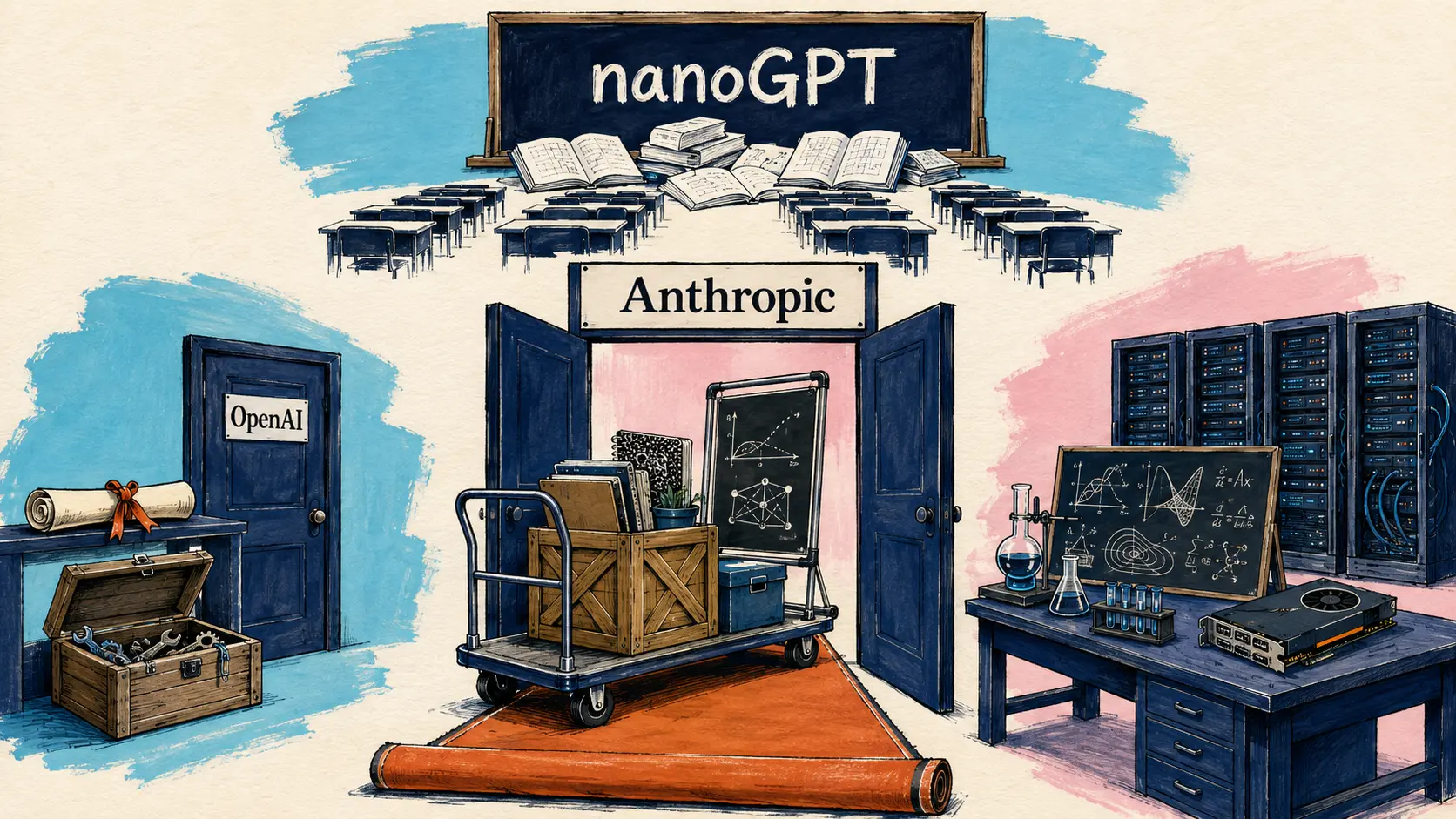
Andrej Karpathy joins Anthropic
May 19 — Andrej Karpathy announced on X that he has joined Anthropic. The news generated more than 11.3 million views, 102,000 likes, and 13,000 reposts in a few hours — exceptional engagement that measures the impact of this hiring in the community.
“Personal update: I’ve joined Anthropic. I think the next few years at the frontier of LLMs will be especially formative. I am very excited to join the team here and get back to R&D. I remain deeply passionate about education and plan to resume my work on it in time.” — @karpathy on X
Karpathy is one of the best-known figures in the field. His path: a PhD at Stanford, founding member of OpenAI, director of AI at Tesla, then an independent figure with the educational nanoGPT series and his machine learning courses followed by millions of people.
His arrival at Anthropic significantly strengthens the fundamental research team at the exact moment when competition among frontier labs is intensifying. An ex-OpenAI executive joining Anthropic — the signal is strong about talent dynamics in the sector.
Anthropic did not specify his exact role. The announcement coincides with the Code with Claude London event and several major launches on the same day.
Google I/O 2026 — The Gemini 3.5 agentic era
May 19 — Google I/O 2026 is taking place today, with the central theme of the Gemini agentic era (agentic Gemini era). During the keynote, Google announces a coherent set of announcements that all revolve around Gemini’s ability to act autonomously, proactively, and persistently.
“Three years ago, Gemini started by understanding the world. With Gemini 2, models learned to think and reason. Late last year, Gemini 3 brought any idea to life. Today, we’re continuing that journey with our Gemini 3.5 series, starting with Gemini 3.5 Flash, delivering frontier performance for agents and coding.” — @GoogleAI on X
The main announcements from the I/O 2026 keynote:
| Announcement | Category |
|---|---|
| Gemini 3.5 Flash | New model (agents + coding) |
| Gemini Omni | Multimodal video model |
| Gemini Spark | 24/7 personal agent |
| Daily Brief | Personalized morning agent |
| Neural Expressive | New app design |
| Managed Agents API | Antigravity infrastructure for developers |
| Google AI Studio | Renewed with agent templates |
Gemini 3.5 Flash — Speed and intelligence for agents
May 19 — Gemini 3.5 Flash is the first model in the new 3.5 generation. It is designed to combine frontier intelligence and lightning-fast action, especially optimized for agent and coding use cases.
Gemini 3.5 Flash is the underlying engine for the Antigravity agent (Managed Agents API) and Gemini Spark. It is available via the Gemini API and in Google AI Studio as of May 19.
| Generation | Key capability |
|---|---|
| Gemini 1 | World understanding |
| Gemini 2 | Reasoning and thinking |
| Gemini 3 | Multimodal creation |
| Gemini 3.5 Flash | Agents, coding, lightning speed |
The model is also generally available in GitHub Copilot on the day of launch — on Pro, Pro+, Business, and Enterprise plans. GitHub reports near-Pro performance at Flash speed, with efficient tool use, fast response times, and high cache efficiency. Rollout is gradual; Copilot Enterprise and Business admins must enable the Gemini 3.5 Flash policy in settings.
| Copilot attribute | Value |
|---|---|
| Plans affected | Pro, Pro+, Business, Enterprise |
| Supported IDEs | VS Code, Visual Studio, JetBrains, Xcode, Eclipse, GitHub Mobile |
| Premium multiplier | 14× (temporary, subject to change) |
Gemini Omni — Create anything from anything
May 19 — Google DeepMind launches Gemini Omni, presented as “the first step toward a model capable of creating anything from anything — starting with video.” It combines Gemini’s intelligence with Google’s generative media systems (Veo, Imagen).
“We’re dropping Gemini Omni: our first step towards a model that can create anything from anything - starting with video. It combines Gemini’s intelligence with our generative media systems - representing a leap forward in world understanding, multimodality, and editing.” — @GoogleDeepMind on X
In the Gemini app, Gemini Omni enables high-quality cinematic video generation from text, images, or existing videos, video editing through natural conversation (cinematic zooms, background changes with a simple prompt), creation of custom AI avatars resembling the user, and one-tap application of built-in templates.
Availability: Gradual rollout starting May 19 for Google AI Plus, Pro, and Ultra subscribers worldwide.
Gemini Spark — 24/7 personal agent
May 19 — Google announces Gemini Spark, a personal AI agent available 24/7. This is a fundamental shift in Gemini’s nature: it moves from a reactive assistant to an active partner that works in the background even when the user closes their device (cloud architecture).
Spark runs on Gemini 3.5 Flash via the Antigravity infrastructure. It is deeply integrated with Workspace tools (Gmail, Docs, Slides, Calendar).
| Capability | Detail |
|---|---|
| Recurring tasks | Automatic triggers (e.g.: analyze monthly statements) |
| Skill learning | On user instruction |
| End-to-end workflows | Meeting summary → Google Doc → follow-up email |
| MCP connections | Canva, OpenTable, Instacart at launch |
| User control | Confirmation required before high-impact actions |
Availability: Trusted testing this week; beta for Google AI Ultra subscribers in the United States the following week. Arrival in the Gemini macOS app is planned for summer 2026.
Managed Agents in the Gemini API — Open Antigravity infrastructure
May 19 — Google launches Managed Agents in the Gemini API, allowing developers to deploy agents with a single line of code in an isolated, ephemeral Linux environment. The infrastructure is powered by the Antigravity agent, built on Gemini 3.5 Flash.
This opens Google’s internal agent infrastructure to external developers. The first managed agent was Deep Research (December 2025); now developers can create their own.
| Developer feature | Detail |
|---|---|
| Deployment | One API call — remote Linux environment |
| Capabilities | Web browsing, code execution, file management |
| Customization | AGENTS.md and SKILL.md files |
| Persistent sessions | Full state resumption |
| Reusable agents | Registration via client.agents.create() |
| Enterprise | Gemini Enterprise Agent Platform (private preview) |
Availability: Preview in the Gemini API as of the evening of May 19; templates in Google AI Studio.
🔗 Managed Agents API announcement
Claude Managed Agents — Self-hosted sandboxes and MCP tunnels
May 19 — From the Code with Claude London event, Anthropic launched two major new features for Claude Managed Agents.
Self-hosted sandboxes (public beta) — Claude agents can now run in sandboxes hosted on the customer’s infrastructure. Teams keep sensitive files, packages, and services within their own perimeter, with their existing network policies, audit logs, and security tools already in place.
MCP tunnels (research preview) — Agents can reach MCP servers located on a private network without exposing them publicly. MCP tunnels are managed from the Claude Console and supported both in Managed Agents and in the Messages API.
| Feature | Status | Providers |
|---|---|---|
| Self-hosted sandboxes | Public beta | Cloudflare, Daytona, Modal, Vercel |
| MCP tunnels | Research preview (access on request) | Via Claude Console |
🔗 Claude Managed Agents announcement
Grok Skills — Persistent expertise and Office documents
May 18 — xAI launched Skills for Grok 4.3, a persistent memory feature that lets Grok learn preferences, formatting rules, and workflow steps once, then apply them across all subsequent conversations.
“I’m leveling up my Skills. Automate your workflows and get things done in record time with prebuilt and custom Skills.” — @grok on X
| Document type | Capabilities |
|---|---|
Word (.docx) | Creation and editing with full formatting (headings, tables, bullet points) |
| PowerPoint | Slides with visual hierarchy and speaker notes |
| Excel | Formulas, colored sections, clear structure |
| Creation, merging, splitting, and extraction | |
| Skill Creator | Building new custom skills through conversation |
Skills are available on grok.com, iOS, and Android. The user’s custom skills always take priority over the default built-in skills.
Cohere acquires Reliant AI — Sovereign AI for biopharma
May 19 — Cohere announces the acquisition of Reliant AI, a company specialized in AI for biopharma, with offices in Montreal and Berlin. This move strengthens Cohere’s sovereign AI strategy in the healthcare and life sciences sectors.
“Healthcare represents one of the most consequential opportunities for AI and it demands secure, sovereign, and domain-specific systems.” — Aidan Gomez, Co-Founder & CEO, Cohere
Acquisition contributions:
| Element | Detail |
|---|---|
| Team | High-level researchers specialized in biopharma |
| Data | Proprietary biomedical databases |
| Technology | Intelligent research workbench |
| Transferred customers | GSK, Medicus Pharma, Kyowa Kirin |
New product: North for Pharma — Cohere announces development of an agentic AI system designed for biopharma teams working on R&D, clinical development, and scientific analysis. It extends the “North” suite already offered for the financial and telecom sectors.
Karl Moritz Hermann (former CEO of Reliant AI) becomes VP of AI Verticalizations in Berlin. Marc Bellemare (co-founder, Canada CIFAR AI Chair, Mila) becomes VP of Modelling in Montreal.
KPMG × Anthropic — Global alliance (276,000 employees, 138 countries)
May 19 — KPMG, one of the world’s largest professional services firms, announced a global strategic alliance with Anthropic. The firm integrates Claude into its Digital Gateway platform and gives Claude access to its entire workforce of more than 276,000 employees in 138 countries.
The main pillars: Claude Cowork and Managed Agents integrated into Digital Gateway, new tools for tax and legal clients, KPMG becomes Anthropic’s preferred partner for private equity funds, and KPMG teams use Claude Code (via KPMG Blaze) to modernize aging IT systems.
“Building an AI agent to help clients adjust to changing tax regulations used to take weeks and required teams to switch between multiple tools and chat windows. With Cowork and Managed Agents integrated in Digital Gateway, that same capability takes minutes.” — Rema Serafi, Vice President of Tax, KPMG US
This rollout builds on two years of internal adoption at KPMG in the United States.
🔗 Anthropic × KPMG announcement
Gemini App — Neural Expressive and Daily Brief
May 19 — The Gemini app receives two major new features.
Neural Expressive is a new design language for the AI era: smooth animations, vivid colors, new typography, haptic feedback. The Gemini Live experience (voice conversation) is now directly integrated into the main interface — seamless switching between typing and conversation. Global rollout as of May 19 on web, Android, and iOS for all users.
Daily Brief is an agent that generates a personalized summary every morning based on Gmail, Calendar, and the user’s priorities. It goes beyond a simple summary: it organizes, prioritizes, and suggests concrete next actions. Gradual rollout for Plus, Pro, and Ultra subscribers, starting in the United States.
OpenAI — C2PA, SynthID, and public verification tool
May 19 — OpenAI announces a multi-layered approach to the provenance of AI-generated content, combining three complementary mechanisms.
| Mechanism | Scope | Resistance to modification |
|---|---|---|
| C2PA metadata | Images, audio, video | Medium (removable) |
| SynthID watermarking (Google DeepMind) | Images only | High |
| openai.com/verify tool | OpenAI-generated content | N/A |
OpenAI now integrates Google DeepMind’s invisible digital watermark SynthID into all images generated via ChatGPT, Codex, and the OpenAI API. SynthID encodes the origin directly into the image pixels in an imperceptible way and resists most common modifications (cropping, filters, compression). The public tool openai.com/verify allows anyone to upload an image to detect the presence of a SynthID watermark — currently in limited preview for OpenAI content only.
NVIDIA Sana WM — World Model on a Single GPU
May 19 — NVIDIA AI introduces Sana WM (World Model). From a single image, a text description, and a camera trajectory, the model generates coherent and controllable videos — all on a single GPU.
The architecture is based on four innovations: Hybrid Linear Attention, Dual-Branch Camera Control, Two-Stage Generation Pipeline, and Robust Annotation Pipeline. The project is entirely open source (paper + code + model).
Wan2.7-Image — Color Palette Control
May 19 — Alibaba announces color palette control (Palette Control) for Wan2.7-Image. The feature makes it possible to extract the color palette from any image — like an artistic masterpiece — and apply it to a new creation. Available directly on wan.video. The announcement generated 529 742 views on X.
ElevenLabs — Albert Einstein’s Voice for Teaching
May 19 — ElevenLabs announces the introduction of the recreated voice of Albert Einstein on its platform, as a dedicated conversational teaching agent. The agent illustrates how voice AI can make learning more interactive, accessible, and multilingual. A demo is available on start.elevenlabs.io. Teachers can access the free Pro plan through the Impact program.
At the same time, ElevenLabs announces a pilot in Poland: deployment of voice agents in public healthcare services (NFZ) this summer.
xAI Grok integrated into OpenClaw — Local open-source multi-messaging agent
May 19 — xAI announces the integration of Grok into OpenClaw, a personal open-source, local-first agent (local-first). Grok and X Premium subscribers can now use Grok in OpenClaw, which runs on any hardware (Mac Mini, laptop, Raspberry Pi) and connects to WhatsApp, Telegram, Slack, Discord, Signal, and iMessage.
Z.ai GLM-5.1 — No. 1 open-source SWE-Bench Pro, MIT, 200K context
May 18 — Z.ai (Zhipu AI) makes GLM-5.1 available on OrcaRouter. The model claims the top spot among open-source models on SWE-Bench Pro (a real-world code repair benchmark), surpassing even some proprietary models. MIT license, 200K token context, designed for long-horizon agentic coding (long-horizon agentic coding).
Briefs
-
The Problem Solvers (Anthropic) — New video series featuring founders building with Claude. First episodes: Scott Wu (Cognition/Devin) and Kay Zhu (Genspark). 🔗 claude.com/problem-solvers
-
Manus × Higgsfield (MCP connector) — Manus integrates Higgsfield via MCP to give creators professional control over image/video generation within their workflows. 🔗 manus.im/blog
-
OpenAI Guaranteed Capacity — New offer allowing companies to reserve access to OpenAI compute resources via 1- to 3-year commitments, with increasing discounts depending on term length. 🔗 openai.com
-
Perplexity Computer — Rho — Rho reduced weekly meeting time by 90% and saved 120 hours over 12 weeks thanks to Perplexity Computer, which monitors Slack, Notion, Jira, Figma, and Google Docs. 🔗 Perplexity on X
What this means
The convergence of Managed Agents. Google and Anthropic announced on the same day, almost at the same time, a similar infrastructure under the same name: Managed Agents. At Google, it’s Antigravity opened via the Gemini API — a single call is enough to deploy an agent in an isolated Linux sandbox. At Anthropic, it’s self-hosted sandboxes (Cloudflare, Daytona, Modal, Vercel) and MCP tunnels for private networks. This convergence is no accident: it marks the emergence of a new standardized layer of AI infrastructure, between the raw model and the final application.
Enterprise AI is organizing around sovereignty. Cohere’s acquisition of Reliant AI, the KPMG-Anthropic alliance with Claude in Digital Gateway, and the OpenAI Guaranteed Capacity offering all point to the same movement: large organizations want AI systems within their perimeter, with their data, their security rules, and multi-year capacity commitments. “Sovereign” (sovereign) has become the keyword for enterprise AI in 2026.
The race for long-horizon agentic coding. Gemini 3.5 Flash (agents + coding optimized), Z.ai’s GLM-5.1 (No. 1 open-source SWE-Bench Pro, 200K context), Grok Skills (persistent workflows) — all target the same use case: an agent that works on a complex task for hours without human intervention. GitHub Copilot integrates Gemini 3.5 Flash on the very day of its launch, illustrating how quickly developer tooling absorbs new models.
Provenance and trust in AI content. The C2PA + SynthID + openai.com/verify combination announced by OpenAI (with SynthID from Google DeepMind) represents a novel multi-layer approach: metadata for context, invisible watermarking for persistence even after modification, and a public verification tool. This move toward traceability of generated content is gradually becoming an industry norm, driven jointly by OpenAI, Google, and the C2PA coalition.
Sources
- Karpathy on X
- Claude Managed Agents updates
- Anthropic × KPMG
- Google I/O 2026 — Next evolution Gemini App
- GoogleAI on X — Gemini 3.5
- GoogleDeepMind on X — Gemini Omni
- Managed Agents API Gemini
- GitHub Copilot — Gemini 3.5 Flash GA
- GitHub on X — Gemini 3.5 Flash
- Grok Skills
- Cohere acquires Reliant AI
- OpenAI Content Provenance
- NVIDIA Sana WM
- Wan2.7-Image Palette Control
- ElevenLabs Einstein
- xAI Grok × OpenClaw
- Z.ai GLM-5.1