ai-powered-markdown-translatorArticle translated from French to English with gpt-5.4-mini.
May 11, 2026 marks a busy day: OpenAI launches an enterprise deployment subsidiary with USD 4 billion in initial investment, Anthropic makes Claude Platform on AWS available to all AWS customers, and xAI unveils Grok Voice Think Fast 1.0 for real-time voice customer support. On the tools side, GitHub Copilot reaches a milestone with organization-level secrets management, Gemini introduces Personal Intelligence for personalized trip planning, and NVIDIA releases OpenShell v0.0.37.
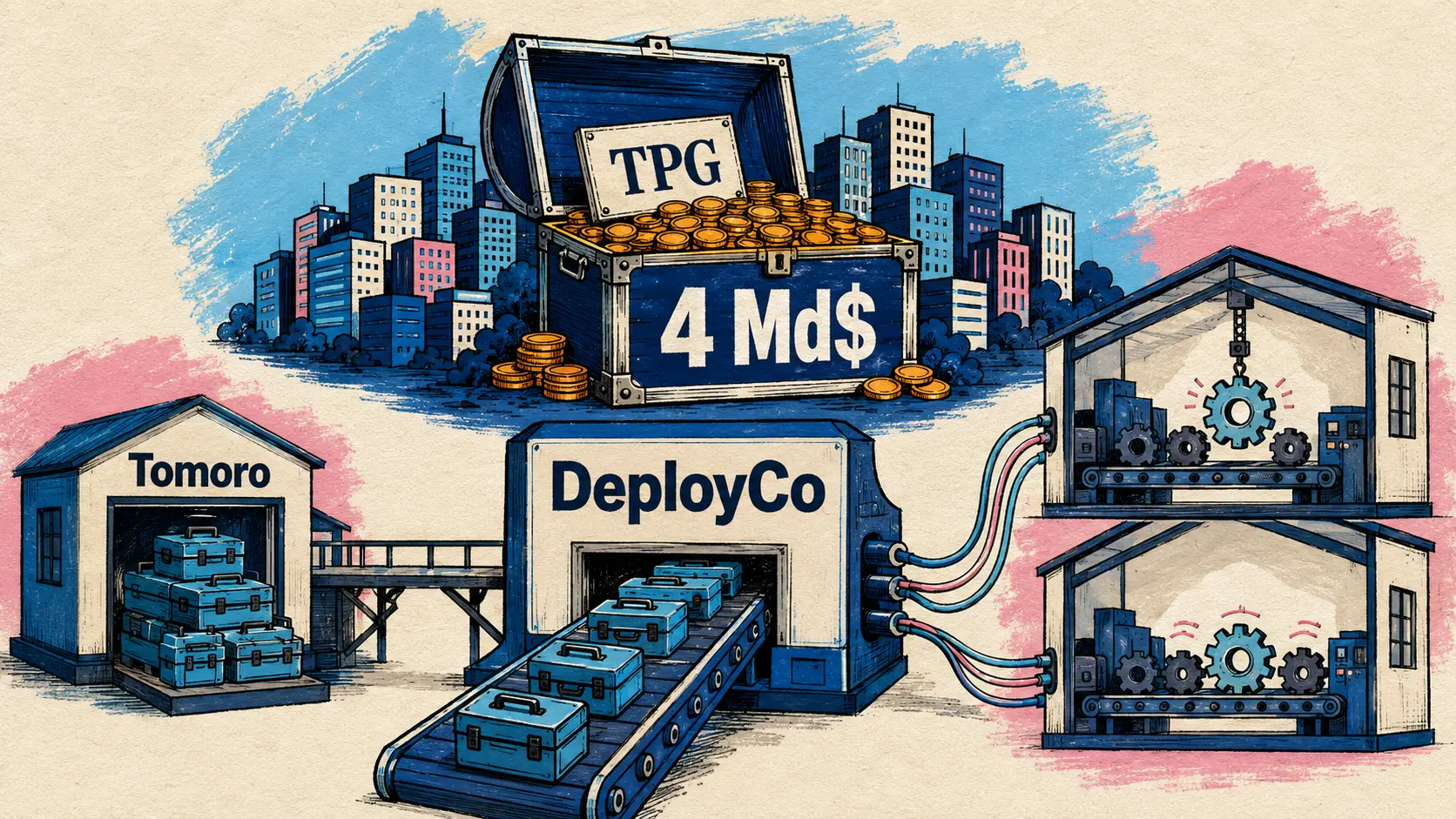
OpenAI Deployment Company — enterprise subsidiary with USD 4 billion
May 11 — OpenAI launches the OpenAI Deployment Company (nicknamed “DeployCo”), a dedicated entity designed to help organizations integrate and deploy AI systems directly into their critical operations. This is not just another cloud offering: DeployCo sends Forward Deployed Engineers directly to customers to identify high-value AI opportunities, redesign workflows, and deploy to production.
Structure and partners:
| Category | Partners |
|---|---|
| Lead investor | TPG |
| Co-founders | Advent, Bain Capital, Brookfield |
| Founding partners | B Capital, BBVA, Emergence Capital, Goldman Sachs, SoftBank Corp., Warburg Pincus, WCAS, Goanna |
| Advisory / integration | Bain & Company, Capgemini, McKinsey & Company |
Tomoro acquisition: OpenAI incorporates Tomoro at launch, an applied AI consulting firm whose clients include Tesco, Virgin Atlantic, and Supercell. The acquisition brings in about 150 experienced engineers (Forward Deployed Engineers and Deployment Specialists). Completion is subject to regulatory approvals.
Key figures: USD 4 billion in initial investment, more than 2,000 companies supported by the partners, and more than one million companies already using OpenAI products and APIs. DeployCo is majority-owned and controlled by OpenAI.
“AI is becoming capable of doing increasingly meaningful work inside organizations. The challenge now is helping companies integrate these systems into the infrastructure and workflows that power their businesses. DeployCo is designed to help organizations bridge that gap and turn AI capability into real operational impact.” — OpenAI official announcement
Claude Platform on AWS — general availability
May 11 — Anthropic makes Claude Platform on AWS officially available to all AWS customers. This offering is distinct from Claude on Amazon Bedrock: it provides direct access to the full native Claude API, with authentication via AWS IAM, logging via CloudTrail, and consolidated billing on the AWS account.
Included features:
| Feature | Status | Description |
|---|---|---|
| Claude Managed Agents | Beta | Building and deploying agents at scale |
| Advisor strategy | Beta | Consulting with an advisor model to enrich agents |
| Web search + web fetch | GA | Access to real-time data |
| Code execution | GA | Python, visualizations, data analysis |
| Files API | Beta | Uploading persistent documents between conversations |
| Skills | Beta | Teaching best practices to Claude |
| MCP connector | Beta | Connecting to any remote MCP server without client code |
| Prompt caching | GA | Reducing costs on repeated context |
| Citations | GA | Grounding responses in source documents |
| Batch processing | GA | High-volume asynchronous workloads |
The available models are Claude Opus 4.7, Sonnet 4.6, and Haiku 4.5. New models will be rolled out simultaneously on Claude Platform on AWS and through the direct Anthropic API.
Difference from Amazon Bedrock: Bedrock operates within the AWS perimeter with AWS as the data processor — suited to companies subject to strict data residency requirements. Claude Platform on AWS provides access to all native Claude API features from AWS infrastructure, with AWS as an access layer only.
Availability: Most AWS commercial regions, with global and U.S. compliance support (including GovCloud).
Grok Voice Think Fast 1.0 — real-time voice agent for customer support
May 8 — xAI launches Grok Voice Think Fast 1.0, a voice agent designed for production customer support. The positioning is explicit: a voice agent “built for the real world,” capable of handling real-time conversations with end users — not just internal demos. The announcement reached 70 million views in 3 days on X, signaling significant market interest.
The announcement describes an agent handling classic customer support scenarios by voice: product questions, troubleshooting, escalation. The “Think Fast” positioning suggests an architecture optimized for latency — a critical criterion for production voice deployments where any pause longer than 500 ms degrades the user experience.
Market context: The announcement of Grok Voice Think Fast 1.0 is part of a race for voice agents in customer support. OpenAI had launched GPT-Realtime-2 on May 7 (covered in the May 10 article). ElevenLabs is deploying voice agents at Mahindra for an automotive launch (see Briefs). Every major player is now positioning an enterprise voice-agent offering.
Availability: Accessible via xAI APIs. Pricing not specified in the announcement.
Gemini Personal Intelligence — custom travel itineraries
May 11 — Gemini launches Personal Intelligence, a feature that connects the Gemini app to the user’s personal data to create fully personalized travel itineraries. Available data sources: Gmail (travel history, booking confirmations), Google Photos (visited destinations), Google Search (search preferences), and YouTube (watched content).
How it works:
| Aspect | Detail |
|---|---|
| Main use case | Personalized trip planning |
| Data sources | Gmail, Google Photos, Google Search, YouTube |
| User control | Choice of connected apps, settings management at any time |
| Availability | Gemini app (iOS/Android) |
The user chooses which apps to connect and can change personalization preferences at any time. The feature fits into the roadmap toward Google I/O 2026 (May 19), where broader announcements about Gemini’s agentic capabilities are expected. Personal Intelligence extends Gemini Agent (launched with Gemini 3 in November 2025) by making personalization accessible through the user’s existing Google data.
GitHub Copilot cloud agent — organization-level secrets and variables
May 8 — GitHub reaches a significant milestone for enterprise teams: Copilot cloud agent now has its own dedicated “Agents” section for secrets and variables, separate from the “Actions”, “Codespaces”, and “Dependabot” sections. The main new feature is organization-level configuration — a first for Copilot cloud agent.
What changes in practice:
| Before | After |
|---|---|
| Secrets configured repository by repository | Centralized organization-level configuration |
| Duplication across each repository | One organization secret accessible to all selected repositories |
| Fragmented management | Dedicated “Agents” section in repository and organization settings |
This makes it easier to deploy shared configurations at scale: private package registries, shared MCP servers, shared API tokens. Fine-grained control remains available: for each secret or variable, the administrator chooses which repositories can access it.
🔗 GitHub Changelog — Copilot cloud agent secrets and variables
Developer tools — updates
GitHub Mobile — create repositories from the app
May 11 — GitHub Mobile now allows repositories to be created directly from iOS and Android. On iOS, the + button is available from the home screen or the profile. On Android, from the home screen or the profile’s Repositories section. The user can set the name, visibility (public/private), a description, choose a template, and initialize with a README, a .gitignore, or a license.
🔗 GitHub Changelog — Create repositories on mobile
Manus Website Builder — “Make a copy” feature
May 11 — Manus Website Builder introduces duplication of WebDev projects into an independent session. What gets transferred when copying: the full source code, database schema, secrets and values, and a summary of the conversation history. What is not transferred: database data, custom domain settings, GitHub connection, and the full chat history.
The copied project starts in an unpublished state. Typical use cases: risk-free redesign, reuse as a template, separate payment flow testing, market-specific variants.
🔗 Manus blog — Make a copy WebDev
Codex + OpenAI Developers MCP Server
May 11 — Codex integrates the OpenAI Developers MCP Server, enabling faster building of AI applications and agents directly through OpenAI APIs. A video demo accompanies the announcement, showing the accelerated development workflow.
NVIDIA OpenShell v0.0.37 — open source compute framework
May 11 — NVIDIA releases OpenShell v0.0.37, an open source distributed compute framework. This version adds pluggable compute drivers for Docker, Podman, Kubernetes, and MicroVM — enabling AI workloads to run across different runtime environments without changing application code.
Other new features: OIDC + RBAC gateway authentication, Helm chart with Kubernetes user namespaces, Debian/RPM/Homebrew packages for simplified installation. Breaking change: the gateway must be recreated before upgrading to v0.0.37.
Grok 20+ new connectors
May 11 — Grok extends its integration capabilities with 20+ new connectors: documents, calendar, email, code, and other data sources. This expansion follows the initial connectors (emails, slides, calendar, Notion) announced on May 8. The stated goal is to automate more tasks directly from the Grok interface, without using third-party tools.
Claude’s Constitution — audiobook version
May 11 — Claude’s Constitution, the document defining the model’s values and behaviors, is now available in audiobook format. The recording is narrated by two of its main authors: Amanda Askell and Joe Carlsmith, both researchers at Anthropic.
The audiobook includes a full reading of the document, a Q&A on the drafting process, the philosophies that guided the document, and a reflection on how the Constitution may evolve as models grow more capable. The Constitution remains available in text form at anthropic.com/constitution, under the Creative Commons CC0 1.0 license.
Briefs
-
Gemini — digitizing paper notes — Google publishes a tutorial on digitizing handwritten notes with Gemini to automatically generate study guides or cheat sheets. Photograph your pages, upload them to Gemini, and ask for a structured guide. 🔗 Google blog
-
ElevenLabs × Mahindra — Mahindra (100+ countries) deployed voice agents powered by ElevenLabs to scale its outreach program during the launch of a new SUV. 🔗 Tweet @ElevenLabs
-
OpenAI Campus Network — OpenAI opens an interest form for university student clubs as part of its Campus Network, aiming to expand its academic presence. 🔗 openai.com
What this means
Two opposing enterprise strategies. OpenAI DeployCo and Claude Platform on AWS represent two visions of enterprise AI deployment. OpenAI sends human teams directly to customers to redesign critical workflows — an AI-augmented, capital-intensive, relationship-driven consulting model. Anthropic bets on cloud infrastructure by giving AWS developers native access to the full Claude API from their existing environment. One speeds up time-to-value through field teams, the other through integration into already existing tools. These two approaches can coexist at the same enterprise customer.
Real-time voice agents are moving into production. Grok Voice Think Fast 1.0 and GPT-Realtime-2 (launched on May 7) signal that major players are crossing the line from pilot to production deployment in voice customer support. ElevenLabs at Mahindra shows this concretely: AI voice agents deployed in a real automotive launch in 100+ countries. The next battle will be fought on perceived latency, the ability to escalate to a human, and edge-case handling.
Agent tooling is standardizing around MCP. This week sees both Anthropic announcing the native MCP connector in Claude Platform on AWS, and OpenAI integrating an MCP Server into Codex to speed up app development. GitHub Copilot cloud agent centralizes secrets at the organization level to make large-scale agent configuration easier. MCP is gradually becoming the interoperability layer for agents — a trend confirmed by these three simultaneous announcements.
Personal AI relies on existing data. Gemini Personal Intelligence does not invent a new model: it connects what already exists (Gmail, Photos, Search, YouTube) to personalize travel suggestions. This is a clear strategic direction — the most useful AI is not the one that knows the most in general, but the one that knows the user specifically. Google I/O 2026 (May 19) is expected to amplify this trend.
Sources
- Claude Platform on AWS — Official Blog
- Tweet @claudeai — Claude Platform on AWS
- OpenAI Deployment Company — Official Announcement
- Tweet @OpenAI — DeployCo
- Tweet @xai — Grok Voice Think Fast 1.0
- Tweet @GeminiApp — Personal Intelligence
- GitHub Changelog — Copilot Cloud Agent Secrets and Variables
- GitHub Changelog — Create repositories on mobile
- Manus Blog — Make a copy WebDev
- Tweet @OpenAIDevs — Codex + MCP Server
- Tweet @NVIDIAAI — OpenShell v0.0.37
- Tweet @grok — 20+ new connectors
- Tweet @AnthropicAI — Claude’s Constitution audiobook
- Google Blog — Digitize your notes
- Tweet @ElevenLabs — Mahindra voice agents
- OpenAI Campus Network — Clubs form
- AWS — Claude Platform
- Anthropic — Constitution