ai-powered-markdown-translatorArticle translated from fr to en with gpt-5.4-mini.
May 28, 2026 concentrates an unusual density of major announcements: Anthropic raises $65 billion (Series H) and launches Claude Opus 4.8 — available the same day in general availability (generally available) in GitHub Copilot — while Mistral rebrands Le Chat to Vibe, a unified work and code agent. Perplexity Computer lands natively in Word, Excel, PowerPoint, and Outlook. In parallel: Dynamic Workflows in Claude Code, Grok Build 0.1 in public API, Codex CLI 0.135.0, ElevenLabs Dubbing v2, and Language Weaver Pro, which beats DeepL in 31 out of 32 languages.
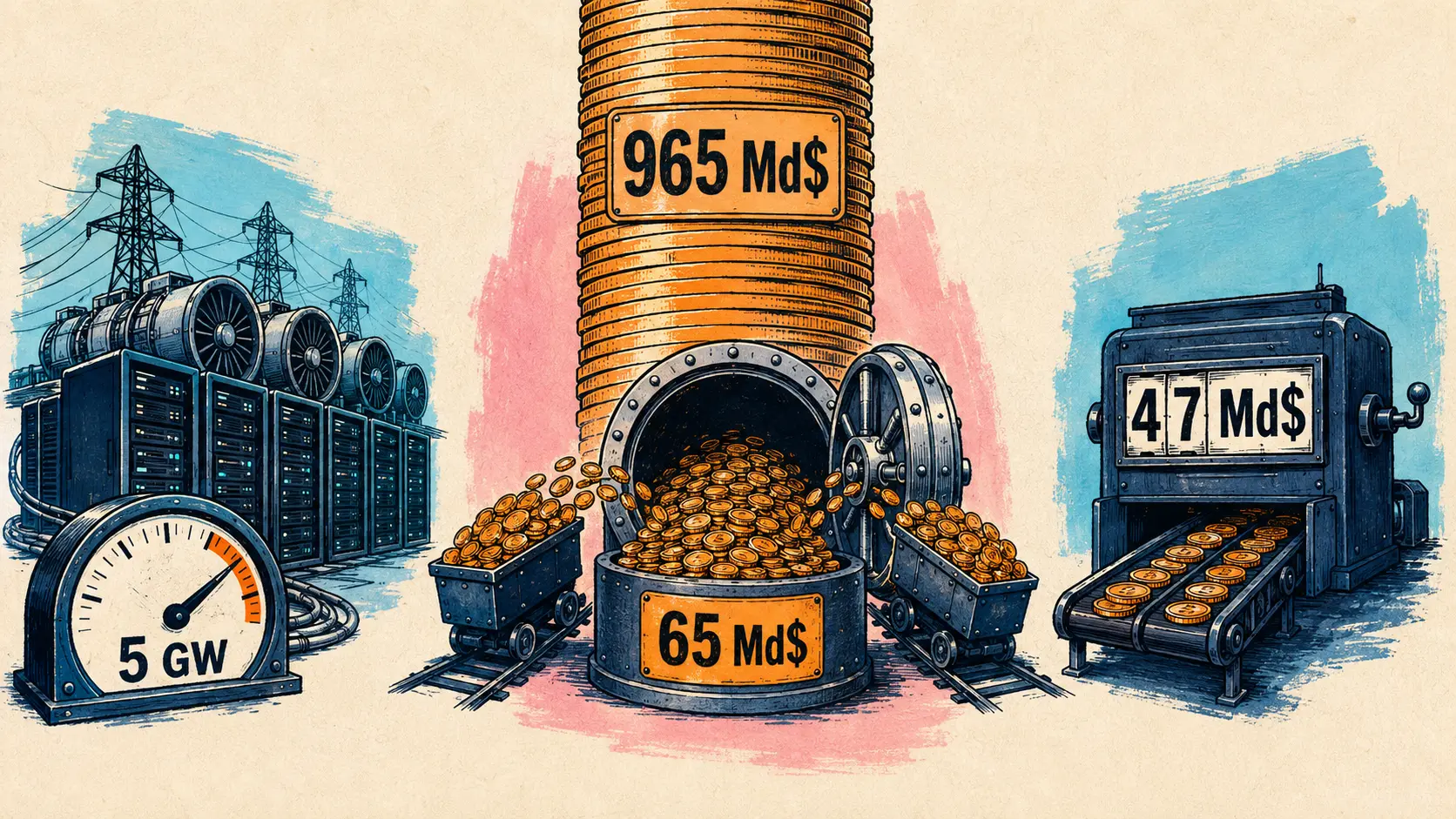
Anthropic raises 65 billion dollars (Series H) — $965 billion valuation
May 28 — Anthropic announces the largest fundraising round in its history: $65 billion in a Series H round led by Altimeter Capital, Dragoneer, Greenoaks, and Sequoia Capital. The post-money valuation reaches $965 billion, just a few steps from the trillion-dollar mark.
The round is co-led by Capital Group, Coatue, D1 Capital Partners, GIC, ICONIQ, and XN. Investors include Baillie Gifford, Blackstone, Brookfield, D.E. Shaw Ventures, DST Global, Fidelity, General Catalyst, Insight Partners, Jane Street, Lightspeed, MGX, T. Rowe Price, and Temasek. The round includes $15 billion in prior commitments from hyperscale cloud providers, including $5 billion from Amazon.
Three strategic infrastructure partners are also joining the round: Micron, Samsung, and SK hynix.
Anthropic’s annualized revenue crossed the $47 billion threshold earlier in the month. Claude is now presented as the first frontier model available on the three major global cloud providers: AWS, Google Cloud, and Microsoft Azure.
Signed compute capacity agreements:
| Partner | Capacity |
|---|---|
| Amazon | Up to 5 gigawatts (new) |
| Google + Broadcom | 5 gigawatts of next-generation TPU capacity |
| SpaceX | GPU access in Colossus 1 and Colossus 2 |
“Claude is increasingly indispensable to our growing global community of customers, and we work tirelessly to make tools like Claude Code and Cowork more helpful, more powerful, and more adaptable to their needs.” — Krishna Rao, CFO of Anthropic (anthropic.com/news/series-h)
The funds will be used for safety and interpretability research, compute expansion, and the extension of products and partnerships.
🔗 Series H announcement — Anthropic
Claude Opus 4.8 — Better agentic judgment, same price
May 28 — Anthropic launches Claude Opus 4.8, the new version of its flagship model. This update follows Opus 4.7 with notable improvements in agentic tasks, reasoning quality, and the model’s honesty about its own results — at the same price.
The biggest improvement is in coding-context honesty: Opus 4.8 is about four times less likely than its predecessor to let defects in code slip by without flagging them.
On alignment, Opus 4.8 improves on prosocial traits (supporting the user’s autonomy, acting in their best interest), with markedly lower rates of misaligned behavior than Opus 4.7.
| Metric | Claude Opus 4.8 | Note |
|---|---|---|
| SWE-bench Pro | 69.2 % | — |
| Online-Mind2Web (computer use) | 84 % | Above Opus 4.7 and GPT-5.5 |
| Legal Agent Benchmark | First to exceed 10 % (all-pass) | — |
| Super-Agent benchmark | Only model to complete all cases end to end | Beats GPT-5.5 at cost parity |
| Code honesty | ~4x fewer unreported defects | Vs Opus 4.7 |
| Input price (standard) | $5 / million tokens | Unchanged |
| Output price (standard) | $25 / million tokens | Unchanged |
| API ID | claude-opus-4-8 | — |
Availability: claude.ai, Claude Platform, AWS, Google Cloud, Microsoft Azure — starting May 28, 2026.
Default effort level: Opus 4.8 uses the “high” level by default. The “extra” levels (xhigh in Claude Code) and “max” are available for the hardest tasks and long-running asynchronous workflows.
“Claude Opus 4.8 has noticeably better judgment. In Claude Code, it asks the right questions, catches its own mistakes, pushes back when a plan isn’t sound, and builds up confidence around complex, multi-service explorations before making big changes.” — Tom Pritchard, Staff Engineer (anthropic.com/news/claude-opus-4-8)
🔗 Claude Opus 4.8 announcement
Claude Opus 4.8 now generally available in GitHub Copilot
May 28 — On the same day as Anthropic’s official launch, GitHub announces the general availability of Claude Opus 4.8 in GitHub Copilot — across all supported surfaces.
According to GitHub’s internal tests, the model brings clear progress in code understanding and navigation through large codebases (large codebase navigation), with better complex problem-solving compared to previous versions.
Available surfaces: VS Code (chat, ask, edit, agent), Visual Studio, Copilot CLI, GitHub Copilot cloud agent, GitHub Copilot app, github.com, GitHub Mobile iOS and Android, JetBrains, Xcode, Eclipse.
Transition pricing: until usage-based billing (Usage Based Billing) launches on June 1, 2026, Claude Opus 4.8 applies a 15x multiplier to premium requests.
Access: available for Copilot Pro+, Business, and Enterprise subscriptions. Enterprise/Business administrators must enable the Claude Opus 4.8 policy in their Copilot settings. Rollout is gradual (gradual rollout).
🔗 GitHub Changelog — Claude Opus 4.8 GA
Mistral Vibe — Le Chat becomes a unified Work + Code agent
May 28 — Mistral rebrands Le Chat as Vibe, a unified agent that combines two distinct modes to cover the full range of technical team needs.
Work Mode handles long, complex, multi-step tasks: connections to Google Workspace, Outlook, SharePoint, Slack, and GitHub. Code Mode launches remote coding agents (remote coding agents) directly from the code.mistral.ai web interface, with full GitHub lifecycle management through to the pull request.
The ecosystem is completed by a VS Code extension (same environment as the CLI) and an update to the Vibe CLI with Skills (/ commands), custom modes, sub-agents, and /teleport — a command that moves a session from the local terminal to the cloud and back again.
Pricing:
| Plan | Price |
|---|---|
| Free | Free |
| Pro | $14.99/month |
| Team | $24.99/user/month |
| Enterprise | Custom pricing |
Plans, conversation history, and existing Chat settings are automatically migrated to Vibe. This rebrand brings the consumer assistant and the agentic coding environment under a single brand, aligning Mistral with the chat + CLI + IDE convergence already pursued by its competitors.
Perplexity Computer integrates Microsoft 365 — Word, Excel, PowerPoint, Outlook
May 28 — Perplexity takes another step in integrating its Computer assistant into the heart of work tools: after Microsoft Teams in early May, Computer is now available as a native add-on in Word, Excel, PowerPoint, and Outlook.
From a side panel, teams can use Computer directly inside their Microsoft 365 apps:
| Application | Primary use |
|---|---|
| Excel | Updating financial models (DCF, comparables), FactSet/Snowflake extraction |
| Word | Drafting and rewriting with multi-source context |
| PowerPoint | Generating presentations from Word or Excel |
| Outlook | Writing emails, meeting notes, sales collateral |
Computer is powered by more than 20 leading models, selected automatically based on the task. It connects to SharePoint and more than 400 additional sources. Every response includes citations that make it possible to validate the information before sharing.
Even before this integration, 40% of Computer users were already generating results in Microsoft formats through manual copy and paste. Less than three months after launch, Computer had done the equivalent of $4.4 billion of work for its users.
Available on Microsoft Marketplace for Pro, Max, Enterprise Pro, and Enterprise Max subscribers.
🔗 Perplexity Computer in Microsoft 365 announcement
Fast Mode for Opus 4.8 — 2.5× faster, 3× cheaper than previous versions
May 28 — Claude Opus 4.8 fast mode lets you use the same model at about 2.5 times the normal speed. Compared with earlier versions of this mode, the cost is three times lower, making it accessible for high-throughput workflows. It targets use cases where latency matters most: interactive agents, high-volume generation loops, or batch processing where throughput matters more than per-token unit cost.
| Mode | Input price | Output price |
|---|---|---|
| Standard | $5 / million tokens | $25 / million tokens |
| Fast mode | $10 / million tokens | $50 / million tokens |
Dynamic Workflows in Claude Code (research preview)
May 28 — Dynamic workflows arrive in Claude Code as a research preview, available in the CLI, Desktop app, and VS Code extension.
For the most demanding tasks, Claude plans the work, launches hundreds of sub-agents in parallel in a single session, then checks its results before returning an answer. This mode can be enabled in two ways: by explicitly requesting the creation of a workflow (e.g. "Create a workflow") or via the ultracode setting in Claude Code’s effort menu.
| Use case | Description |
|---|---|
| Security audits | Parallel search in the repository, independent verification of each result |
| Migrations and modernizations | API deprecations, language porting across thousands of files |
| Double-check work | Multiple independent attempts when the cost of an error is high |
Availability: Max, Team, API, and Enterprise (setting ultracode enabled). Note: dynamic workflows consume significantly more tokens than a standard Claude Code session.
🔗 Introducing Dynamic Workflows in Claude Code
Google AI — “TPU Film” short film with Gemini Omni and cardboard puppets
May 28 — Google AI releases “TPU Film”, a 2 min 58 s animated short created in collaboration with director Laurie Rowan and Nexus Studios. The project showcases a hybrid approach between human craftsmanship and AI: cardboard puppets and markers serve as the base, animated by a three-component AI pipeline.
| Component | Role |
|---|---|
| Nano Banana | Generating the first stylized frames from raw images |
| Google AI Studio | Custom tool for testing those frames at scale, pixel-perfect consistency |
| Gemini Omni + DeepMind experimental models | Fusing base animation and stylized frames for the final cinematic render |
“Our AI pipelines were specifically designed to protect the crafty details that give these films their heart, like the tiny human imperfections of puppetry, or the nuance an animator can build into an expression.” — @GoogleAI on X
ElevenLabs Dubbing v2 — AI dubbing that preserves emotions in 90+ languages
May 28 — ElevenLabs launches Dubbing v2, a new generation of its AI dubbing model. Unlike systems based on text transcription, Dubbing v2 conditions directly on the original vocal performance — preserving tone, pacing, delivery, and emotional intent across more than 90 languages.
The model includes a sync-aware translation system that automatically aligns starts, ends, and rhythm, reducing the need for manual adjustments.
Availability and access:
| Channel | Details |
|---|---|
| ElevenCreative | Available today, one-click YouTube localization |
| ElevenProductions | Dubbing v2 + human translators + voice casting |
| API | Coming soon (contact sales) |
| Free trial | 7 days: 1 min (Free), 15 min (Starter), 30 min (Creator+) |
🔗 Introducing Dubbing v2 — ElevenLabs
BFL FLUX Virtual Try-On — AI virtual try-on in under 4 seconds
May 28 — Black Forest Labs expands its FLUX Tools suite with Virtual Try-On: in under 4 seconds, the model generates an image of the person wearing a target garment, while preserving identity (face, body shape) and garment details (logos, seams, prints).
Available via the BFL API (flux-pro-1.1-vto endpoint) and in a public demo at flux-tools.bfl.ai/virtual-try-on.
NVIDIA adopts OpenMDW-1.1 for its open model families
May 28 — NVIDIA adopts the Linux Foundation’s OpenMDW-1.1 framework for its open model families: Cosmos, Isaac GR00T, Ising, and Nemotron. This unified, permissive legal framework covers models, code, documentation, and data.
“We’re adopting the Linux Foundation’s OpenMDW framework across our open model families. This helps make open model licensing simpler and more consistent at scale. A single legal framework across models, code, documentation, and data helps reduce friction for developers and enterprises building with open source.” — @NVIDIAAI
Mistral Search Toolkit — production open-source RAG framework
May 28 — Mistral releases Search Toolkit, a composable open-source framework for production search pipelines.
| Component | Details |
|---|---|
| Ingestion | Parsing, chunking, multi-source embedding with standard adapter interface |
| Retrieval | Sparse BM25, dense embedding, configurable hybrid |
| Evaluation | Recall, precision, MRR, NDCG — side-by-side configuration comparison |
| Deployment | Cloud, on-premises, or edge |
| Agents | MCP integration for indexed search + live data via Connectors |
Client example: CMA CGM × Voxtral for fake news detection, 15 seconds end to end.
🔗 Introducing Search Toolkit — Mistral
Mistral Physics AI — Enterprise platform for ASML, Airbus, Safran, Siemens
May 27-28 — Following the acquisition of Emmi AI (announced on May 22), Mistral is launching its enterprise platform Physics AI. Data-driven AI models learn from the outputs of physical solvers (CFD, FEM) and predict physical behavior in seconds versus hours or weeks for traditional simulations.
Three main use cases: accelerated design, tooling and processes, real-time digital twins (digital twins). Reference partners: ASML (semiconductors), Airbus and Safran (aerospace), Siemens Energy (energy), as well as applications in automotive.
🔗 Introducing Physics AI at Mistral
xAI Grok Build 0.1 — Agentic coding model available via API in public beta
May 28 — grok-build-0.1, the coding model powering the Grok Build CLI, is now available via the xAI API in public beta.
| Feature | Value |
|---|---|
| Speed | 100+ tokens/second |
| Input price | $1 / million tokens |
| Output price | $2 / million tokens |
| Compatibility | Cursor, Hermes Agent, OpenClaw, Kilo Code, OpenCode, OpenRouter, Vercel AI Gateway |
The model is specialized for agentic coding: web development, debugging, MCP support.
Qwen/TongyiLab Fun-Realtime — Two audio models top the speech evaluation
May 28 — The Tongyi Lab team (Alibaba) places two distinct audio models at the top of Artificial Analysis’s independent speech evaluation, totaling 3 #1 rankings. The conversational model Fun-Realtime-AudioChat dominates speech reasoning and full-duplex dialogue dynamics, while the speech recognition model Fun-Realtime-ASR — a distinct model — leads in transcription accuracy.
| Model | Benchmark | Score | Rank |
|---|---|---|---|
| Fun-Realtime-AudioChat | Speech Reasoning (Big Bench Audio) | 97.6% | #1 |
| Fun-Realtime-AudioChat | Conversational Dynamics (Full Duplex) | 97.8% | #1 |
| Fun-Realtime-ASR | AA-WER Index | 1.8% | #1 |
Codex CLI 0.135.0 — Enhanced diagnostics and extended Vim mode
May 28 — Codex CLI is moving to version 0.135.0 with a set of new features and fixes (~60 merged PRs).
New features:
| Feature | Details |
|---|---|
codex doctor | Enhanced diagnostics: environment, Git, terminal, app-server, and thread inventory |
/status | Remote connection details and server version when connecting via remote transport |
| Extended Vim mode | Text-object editing, improved behavior at end of word/line, configurable interrupt shortcut |
/permissions | Named permission profiles and configured custom profiles |
| Python SDK | Friendly presets for thread and turn APIs |
OpenAI “R&D Part 1: Here to Win”
May 28 — OpenAI releases an institutional video titled “R&D Part 1: Here to Win”, part 1 of a series about its research and development strategy. The video reaches 222,000 views and 1,797 likes within the first few hours.
The “Part 1” format signals a series of upcoming communications about OpenAI’s R&D positioning in the AI competition — a brand communication register (brand) that is unusual for the lab, and more geared toward the general public than toward developers.
🔗 R&D Part 1: Here to Win — @OpenAI
OpenAI supports Illinois’ frontier AI law
May 28 — Illinois passes SB 315, one of the strictest AI safety laws in the United States, targeting frontier AI models (frontier AI). OpenAI publicly expresses support for the bill, which it describes as a thoughtful approach to transparency, audits, and incident reporting (incident reporting).
With Illinois joining New York and California on this issue, OpenAI believes the states are gradually converging on a common approach — effectively forming a de facto national framework before any federal regulation. The positioning is strategic: better to help define the rules of the game than to have them imposed.
🔗 OpenAI on Illinois’ AI law — @OpenAINewsroom
Cohere + Mila — Partnership for Quebec French AI
May 27 — Cohere and Mila (the Quebec AI institute founded by Yoshua Bengio) announce an academic research collaboration centered on Quebec French.
The goal: go beyond standardized language performance measures to develop evaluation methods tailored to specific cultural contexts — idiomatic expressions, local cultural references, and administrative registers specific to Canadian institutions.
The initiative aims to strengthen the confidence of Quebec businesses and governments in adopting AI.
🔗 Cohere + Mila — Quebec French partnership
Language Weaver Pro — Cohere and RWS beat DeepL in 31 languages out of 32
May 27 — RWS (one of the world’s largest translation providers) and Cohere launch Language Weaver Pro, a specialized translation model co-developed since September 2025.
In an evaluation by professional translators, Language Weaver Pro achieves 55% wins against DeepL NextGen at the sentence level, and 100% wins on English → Japanese paragraph translations.
| Model | Human evaluation | Automatic benchmark (32 languages) |
|---|---|---|
| Language Weaver Pro | 55% wins vs DeepL | 31/32 languages (first) |
| DeepL NextGen | Reference | Reference |
| GPT-5 | — | Tested |
| Gemini 3 Flash | — | Tested |
| Claude Sonnet 4.5 | — | Tested |
The model runs on only 2 GPUs in RWS’s secure infrastructure — customer data never leaves the RWS environment.
🔗 RWS + Cohere — Language Weaver Pro
Briefs
- Effort control in claude.ai + system entries in Messages API — New effort selector placed next to the model selector (all plans), and the ability to insert
systementries into themessagestable of the API without breaking the cache. - Anthropic — Milan office — Anthropic’s sixth European office after London, Dublin, Paris, Zurich, and Munich, led by Thomas Remy, with partners such as Generali, Enel, Pirelli, and Satispay. 🔗 Announcement
- Midjourney Web Updates 5 — Improved conversational mode (access to Image Prompts, Style References, sidebar settings) and a new “Rerun as HD” button for V8.1 SD images. 🔗 Changelog
- Grok Build CLI 0.2.7 — New
/usageand/logincommands, shared terminals between subagents, better image understanding. 🔗 xAI changelog
What it means
Model architecture and the benchmark war. The launch of Claude Opus 4.8 marks a qualitative shift: Anthropic is no longer competing solely on raw performance benchmarks, but on agentic honesty — a model four times less likely to hide its own errors. The 69.2% SWE-bench Pro score and 84% Online-Mind2Web confirm the progress, but it is the victory on the Super-Agent benchmark (the only one to complete all cases end-to-end, at cost parity with GPT-5.5) that best illustrates the positioning: a model for long and complex workflows, not just for demo performance.
AI economics and capital concentration. The $65 billion raise at a $965 billion valuation places Anthropic at a tier that surpasses almost all major European tech market capitalizations. The $15 billion in hyperscale commitments included in the round (Amazon, Google, SpaceX) signal an unprecedented fusion of financing and infrastructure: investors are not just betting on the technology, but on access to the compute power that makes it possible. Annualized revenue of $47 billion confirms that Anthropic has crossed the threshold from hypergrowth company to systemic player.
Developer tooling: convergence of coding agents. In a single day, three major platforms expose their agentic coding model through standardized channels: Opus 4.8 in GA in GitHub Copilot (15x premium), grok-build-0.1 via the xAI API ($1/$2 per million tokens), and Dynamic Workflows in Claude Code (hundreds of subagents in parallel). Codex CLI 0.135.0 completes the picture with codex doctor and extended Vim mode. This density of simultaneous announcements in developer tooling is no coincidence — it reflects that the competitive field has shifted from the model to the developer experience.
Productivity ecosystem and regulation. The integration of Perplexity Computer into the four most used Microsoft 365 applications ($4.4 billion of work completed in three months) and the launch of Mistral Vibe (rebrand of Le Chat) illustrate a common trajectory: AI assistants are leaving dedicated interfaces to embed themselves into existing work tools. On the regulatory front, OpenAI’s public support for the Illinois law (one of the strictest on frontier models in the United States) is a strategic marker: better to define the rules of the game than to have them imposed.
Sources
- Anthropic Series H — 65 billion dollars
- Claude Opus 4.8 — official announcement
- Tweet @claudeai — Opus 4.8 launch
- Fast Mode Opus 4.8 — @claudeai
- Dynamic Workflows Claude Code — claude.com blog
- GitHub Changelog — Claude Opus 4.8 GA
- Mistral Vibe — official announcement
- Mistral Search Toolkit — official announcement
- Mistral Physics AI — official announcement
- Perplexity Computer in Microsoft 365
- Cohere + Mila — partnership
- RWS + Cohere — Language Weaver Pro
- Grok Build 0.1 on API — xAI
- Grok Build CLI 0.2.7
- Qwen Fun-Realtime-AudioChat — @Ali_TongyiLab
- Codex CLI 0.135.0 — OpenAI changelog
- OpenAI R&D Part 1 — Here to Win
- OpenAI supports Illinois law
- Google AI — TPU Film
- ElevenLabs Dubbing v2
- BFL FLUX Virtual Try-On
- NVIDIA OpenMDW-1.1
- Anthropic Milan office
- Midjourney Web Updates 5